
Connect UAV Manufacturing Data Across Production, Quality, Inventory, and Enterprise Systems
Connect drone manufacturing systems, production equipment, ERP solution, and IoT infrastructure through scalable AIoT integration system.
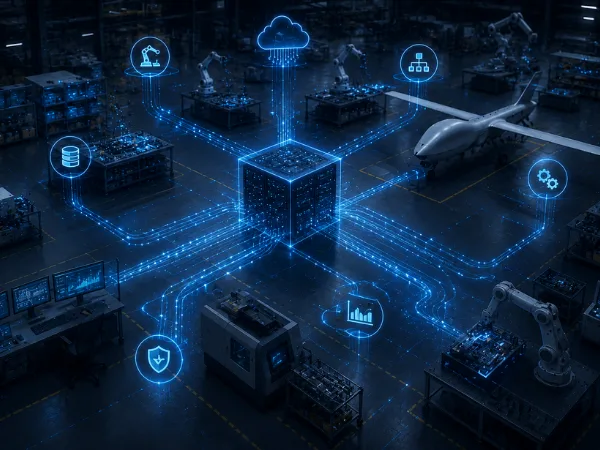
Unified Operational Solution for AIoT Integration for UAV Manufacturing
Modern UAV manufacturing facilities generate operational data from numerous independent systems. Airframe assembly stations, avionics integration cells, composite fabrication areas, inventory systems, access control infrastructure, flight testing environments, quality management solution, manufacturing execution systems, enterprise resource planning applications, and industrial IoT devices all produce valuable information.
Many organizations struggle with fragmented operational visibility because critical manufacturing data remains isolated within disconnected systems. This separation often limits real-time decision making, slows operational response, and increases administrative workloads.
DroneForge AI provides an edge integration system designed specifically for UAV manufacturing environments. The solution connects workforce visibility systems, access control infrastructure, asset tracking technologies, inventory solution, work-in-progress monitoring systems, traceability databases, and enterprise applications into a unified operational solution framework.
The objective is to create a connected digital environment where operational events can be collected, analyzed, correlated, and visualized in real time across the entire drone manufacturing lifecycle.
Core operational domains supported include:
- Workforce visibility and personnel system
- Secure facility access management
- Airframe and avionics asset tracking
- Inventory monitoring and forecasting
- Assembly workflow visibility
- Serialized component genealogy
- Flight testing operations
- Quality assurance monitoring
- Compliance reporting
- Enterprise system integration
The result is a connected manufacturing system that supports informed operational decision-making.
Applications Across UAV Manufacturing Operations
Edge integration capabilities support numerous aerospace production activities including:
- Composite airframe fabrication
- Carbon fiber curing operations
- Airframe assembly
- Avionics integration
- Flight controller installation
- Payload assembly
- Propulsion system production
- Ground control station preparation
- Flight testing programs
- Final acceptance inspections
- Inventory management
- Export-controlled manufacturing
Operational system becomes significantly more valuable when information from multiple systems can be analyzed together.
Hangar Edge System Orchestration
Edge system serves as the operational layer between physical devices and enterprise systems.
Data is continuously collected from:
- RFID readers
- GPS tracking devices
- Production equipment
- Quality inspection systems
- Environmental monitoring devices
The edge layer processes operational events locally before forwarding information to centralized applications.
Benefits include:
- Faster response times
- Reduced network dependency
- Improved operational resilience
- Lower bandwidth requirements
- Real-time event processing
Local system enables manufacturing teams to respond quickly to operational conditions without waiting for centralized processing.
Drone Floor Solution System
DroneForge AI provides an edge-first system that supports data collection, processing, integration, and analytics throughout manufacturing environments.The system is designed to operate across distributed facilities while supporting both local and centralized decision making.
Avionics Middleware Interoperability Layer
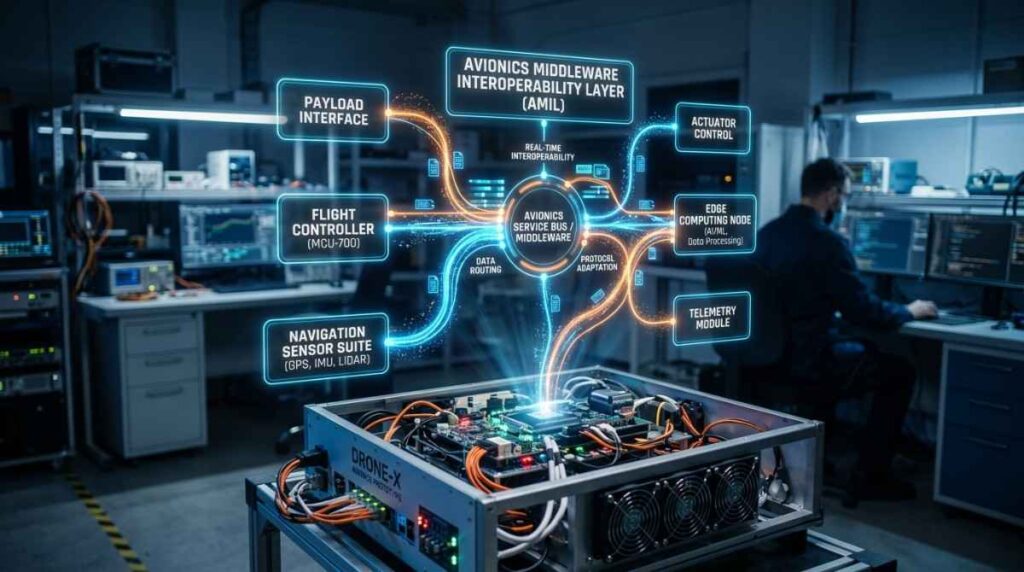
Many UAV manufacturers operate a mixture of modern and legacy systems.
The interoperability layer enables communication between:
- Manufacturing execution systems
- ERP solution
- Product lifecycle management software
- Inventory databases
- Traceability applications
- Maintenance systems
Middleware services standardize information flows and simplify integration between technologies that were not originally designed to communicate.
This approach helps organizations preserve existing investments while improving operational visibility.
Real-Time Hangar Data Synchronization
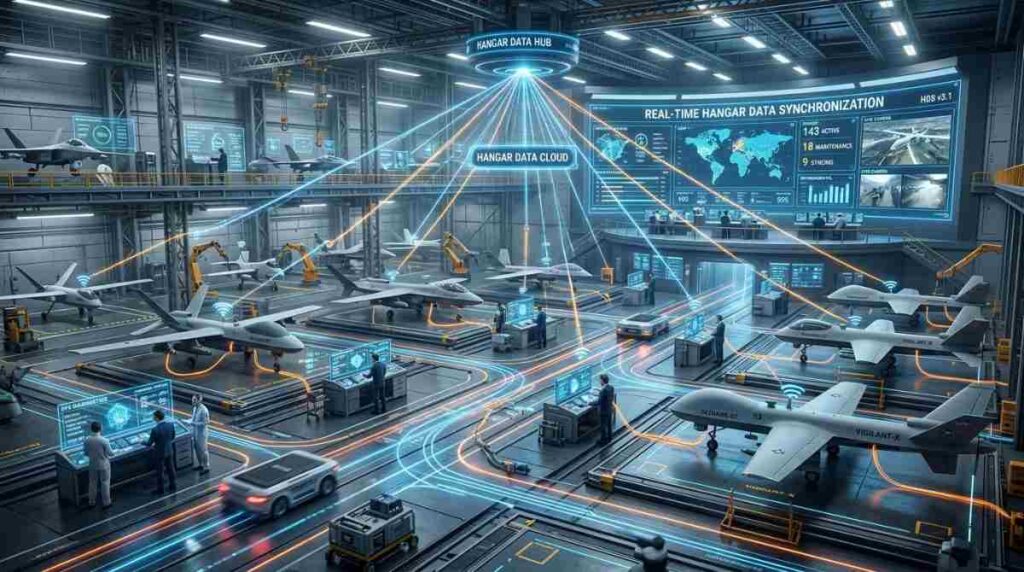
Operational system depends on timely and accurate information.
The synchronization framework continuously exchanges data between:
- Production systems
- Inventory solution
- Workforce tracking systems
- Access control applications
- Asset tracking infrastructure
- Quality systems
Real-time synchronization helps maintain a consistent operational view across departments and facilities.
Production managers, engineering teams, quality personnel, and compliance officers gain access to the same operational information.
UAV Deployment Models
Different organizations have different security requirements, compliance obligations, and IT infrastructure strategies.DroneForge AI supports multiple deployment approaches that align with aerospace manufacturing requirements.
Cloud Software Deployment
Cloud deployments provide centralized visibility across geographically distributed facilities.
Benefits include:
- Multi-site operational monitoring
- Centralized analytics
- Scalable computing resources
- Simplified software maintenance
- Unified reporting environments
Cloud environments can support organizations operating multiple assembly locations, testing facilities, warehouses, and engineering centers.
On-Premises Software Deployment
Many aerospace manufacturing organizations require local control over operational data.
On-premises deployments provide:
- Local infrastructure control
- Internal network isolation
- Facility-level governance
- Custom security system
- Reduced dependency on external connectivity
Organizations managing export-controlled technologies often prefer local deployment models for sensitive operational systems.
Hybrid Deployment System
Some organizations require both local control and centralized visibility.
Hybrid deployments combine:
- Local operational processing
- Centralized reporting
- Facility-level autonomy
- Enterprise-wide analytics
- Distributed data management
Hybrid system allow manufacturers to balance operational requirements with enterprise visibility objectives.
UAV System Connectivity
Operational system requires integration across multiple business and production systems.DroneForge AI provides connectivity frameworks that support the complete manufacturing system.
AIoT Integration for Drone MES Solution
Manufacturing execution systems serve as a central source of production information.
The integration framework supports:
- Work order synchronization
- Production status updates
- Assembly progress reporting
- Labor tracking
- Material consumption visibility
- Workflow monitoring
MES integration creates direct connections between operational events and manufacturing processes.
AIoT Integration for ERP Solution
ERP systems contain critical information related to procurement, inventory, production planning, and financial operations.
Integration capabilities support:
- Inventory synchronization
- Procurement workflows
- Material planning
- Resource allocation
- Asset management
- Operational reporting
Enterprise visibility improves when operational data can be combined with business data.
Product Lifecycle Management Connectivity
PLM systems manage engineering data, product structures, and design information.
Integration enables:
- Engineering change visibility
- Configuration management support
- Product structure synchronization
- Component relationship tracking
Traceability programs benefit from direct connections between design records and manufacturing activities.
Warehouse Management Integration
Warehouse operations play a significant role in drone production.
Integration supports:
- Inventory location visibility
- Material movement tracking
- Receiving activities
- Shipping operations
- Component availability monitoring
Real-time inventory information helps reduce shortages and improve production planning.
Quality Management Connectivity
Quality management systems contain information related to inspections, audits, testing activities, and corrective actions.
Connected quality workflows support:
- Inspection reporting
- Nonconformance tracking
- Test result visibility
- Compliance documentation
- Audit preparation
Operational system improves when quality data is integrated into production decision-making processes.
Legacy Aerospace System Connectivity
Many aerospace manufacturers operate specialized systems that have been deployed for years or even decades.
DroneForge AI supports integration with legacy technologies through:
- API services
- Middleware connectors
- Database synchronization
- Event streaming frameworks
- Protocol translation services
Legacy system connectivity allows manufacturers to modernize operations without disrupting established production processes.
Data System for Workforce, Asset, and Inventory System
The solution supports integration of data generated by:
- RFID workforce tracking systems
- BLE personnel monitoring infrastructure
- Access control solution
- Airframe tracking systems
- Avionics inventory systems
- Warehouse operations
- Work-in-progress monitoring tools
- Traceability applications
The system consolidates these operational data streams into a unified system environment.
AI-Driven Manufacturing System
Connected data becomes significantly more valuable when AI analytics are applied.
Machine learning models help identify:
- Production bottlenecks
- Workforce utilization patterns
- Inventory consumption trends
- Asset utilization opportunities
- Access control anomalies
- Traceability gaps
These capabilities can be extended with AI-powered manufacturing automation and production optimization to improve operational visibility and manufacturing efficiency.
Built on Practical IoT and Aerospace Integration Experience
DroneForge AI was developed within Aperture Venture Studio with support from GAO and reflects decades of experience integrating RFID, BLE, GPS, wireless sensing, industrial IoT, asset tracking, access control, and operational solution systems. Extensive investments in research and development, quality assurance processes, and technical expertise have helped shape integration system designed for demanding industrial environments.
Engineering teams include Ph.D.-level professionals and experienced IoT specialists who have supported projects involving major enterprises, research institutions, government organizations, and advanced manufacturing operations. This practical experience contributes to integration frameworks that address real-world aerospace manufacturing requirements.
Connect Every Layer of UAV Manufacturing Operations
Drone manufacturing facilities rely on data generated across personnel systems, inventory solution, production equipment, quality processes, testing environments, and enterprise applications. Operational visibility improves when these information sources are connected within a unified system.
DroneForge AI helps manufacturers establish integrated operational solution environments where workforce visibility, access control, asset tracking, inventory monitoring, assembly progress, traceability programs, and enterprise systems work together. Through edge computing, AI analytics, RFID, BLE, GPS, industrial IoT devices, and enterprise integration technologies, organizations gain the operational awareness required to support efficient UAV manufacturing and regulatory compliance.
Frequently Asked Questions
What is AIoT integration for UAV manufacturing?
AIoT integration for UAV manufacturing connects production equipment, IoT devices, MES, ERP, PLM, inventory, quality, and workforce systems through a unified edge-to-enterprise architecture. This enables real-time data flow and better operational visibility across UAV production.
How does AIoT improve UAV manufacturing operations?
AIoT helps manufacturers monitor production, inventory, workforce activity, assets, quality, and traceability in real time. AI analytics can identify production bottlenecks, inventory trends, asset utilization opportunities, and other operational issues to support faster manufacturing decisions.
Can AIoT integrate UAV manufacturing systems with MES and ERP?
Yes. AIoT integration can connect UAV manufacturing environments with MES, ERP, PLM, warehouse management, and quality systems. This allows production status, work orders, inventory, material planning, asset data, and other operational information to move between connected systems.
What are the benefits of edge computing for UAV manufacturing?
Edge computing enables local data collection and processing close to UAV production equipment and connected devices. This can support faster event processing, lower network dependency, improved system resilience, and real-time integration between the production floor and enterprise systems.